

White label is currently in beta, and so is the Apps API it runs on. Endpoints, fields, and behavior can still change. Your onboarding contact is the fastest route for anything you hit.
Try the reference integration
We built Sunny, a reference integration, so you can see a working deployment for yourself. It’s a task-management platform with a chat panel where members describe the tool they want and Base44 builds it behind the scenes. The navigation, the URL, and the sign-in are all Sunny’s, so nothing gives away that Base44 is running underneath. A member opens Build an app, describes what they need, and Base44 builds it against Sunny’s own data and design system. They can then publish a finished tool to Sunny’s app market, where other members find and install it.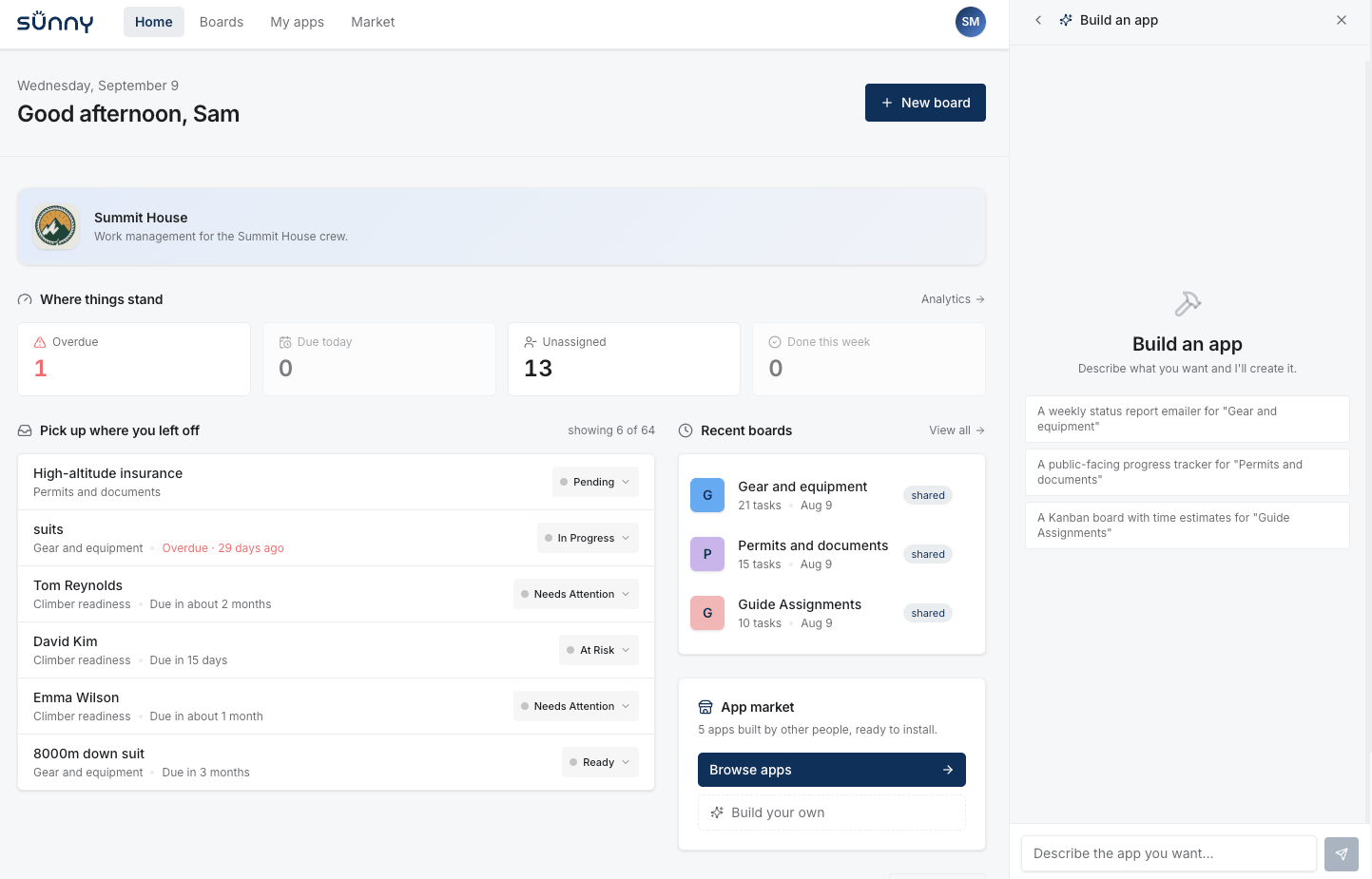
Sunny's dashboard, with the assistant panel open to build a new app
Try it
See Sunny running live at sunny44.com
Read the code
See exactly how the integration works, end to end
Where to start
An integration comes together in three stages. First you get the account and credential your integration builds with. Then you configure your brand and tools in Base44. Then you build the experience into your own platform.See also
- Setup checklist: Everything you need to do to get an integration running
- Tenancy and credentials: The account that owns your users’ apps, and the key that creates them
- The build turn: The six calls your product wraps to create, watch, and ship an app